
TODDLER CARE · 14–24 MONTHS
Toddler Care in Chicago
They're finding their voice.
And suddenly, they have a lot to say.
The toddler years bring a huge shift. Children are moving more, understanding more, making choices, and discovering that they have opinions of their own. Some days that looks like excitement and confidence. Other times it is “no,” dropping to the floor, grabbing a toy, or having very big feelings over something that seems very small to us.
There is a lot happening underneath those moments. Toddlers are working out how the world works, where the boundaries are, how to say what they need, and what to do when another child wants the exact same truck.
Our teachers stay close through all of it. They help children name feelings, practice simple boundaries, and follow familiar expectations as self-control and confidence grow.
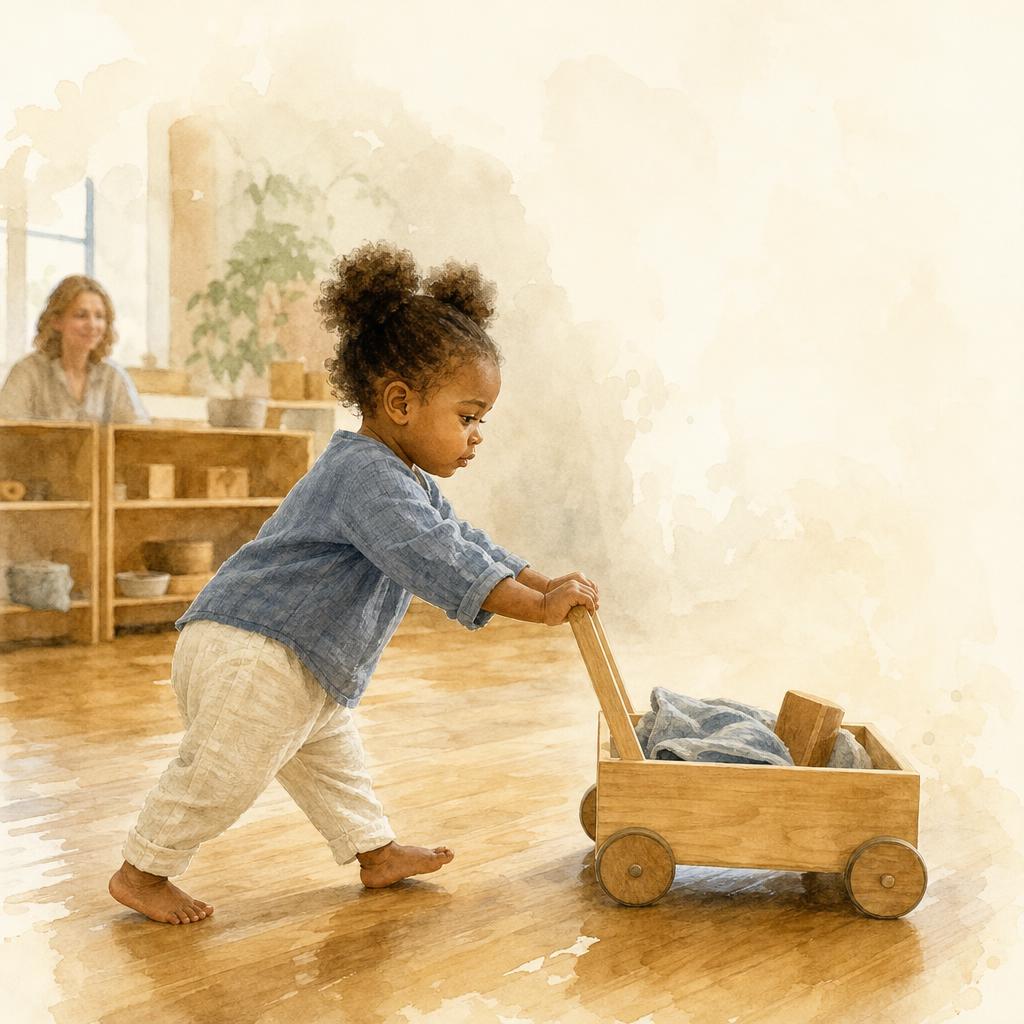
FROM “DO IT FOR ME” TO “LET ME TRY.”
A LOT CHANGES BETWEEN ONE AND TWO
Big feelings are part of growing up.
Toddlers are learning an enormous amount at once — how to move through the world, communicate what they want, be around other children, and discover where the boundaries are. They need room to practice, but they also need adults who understand what is happening underneath the behavior.
Testing boundaries
“No” becomes a very useful word. Toddlers are discovering where the limits are — and checking whether those limits are still there tomorrow.
Big feelings
They can feel frustration, excitement, jealousy, disappointment, and independence long before they have the words or self-control to manage all of it.
Learning to be with others
Sharing, waiting, keeping hands to themselves, asking for something, and handling another child saying “no” are all brand-new skills.
Wanting to do it themselves
Toddlers want choices. They want to walk, carry, climb, help, and try. We give them safe opportunities to practice that growing independence.
STARTING SCHOOL & SEPARATION
“Don’t go.”
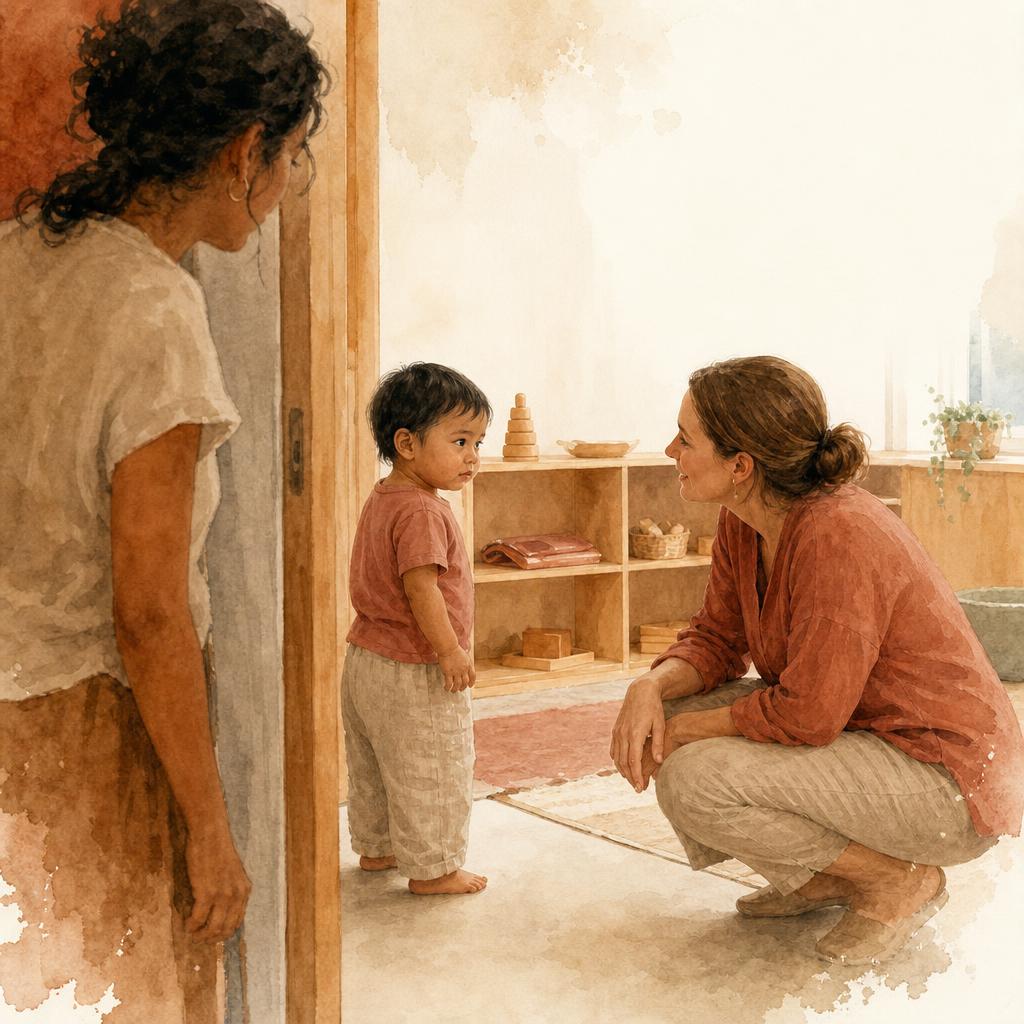
For some toddlers, separation is hard from the very first day. For others, it shows up later, once they fully understand that you are leaving.
We don’t pretend you didn’t leave, and we don’t simply distract them from how they’re feeling. A teacher gets down to their level, acknowledges what is happening, comforts them, and uses simple, consistent language: Mom or Dad left. You are safe. They will come back.
Then we repeat it.
Over time, the classroom becomes familiar. Their teachers become familiar. The order of the day becomes familiar. And most importantly, they begin to experience the same thing again and again: my grown-up leaves, I am cared for, and my grown-up comes back.
That is how we help separation become trust.
TEACHING THROUGH THE TODDLER YEARS
The behavior is what you see.
We look at what's happening underneath it.
A toddler who grabs a toy isn’t necessarily trying to be unkind. A child who screams when it’s time to clean up isn’t trying to make the day difficult. At this age, children are still developing the language, patience, impulse control, and social understanding they need to handle those moments differently.
That changes how our teachers respond.
Because our teachers understand toddler development, they can recognize what a child may be trying to communicate, step in calmly, and teach the skill that is still developing.
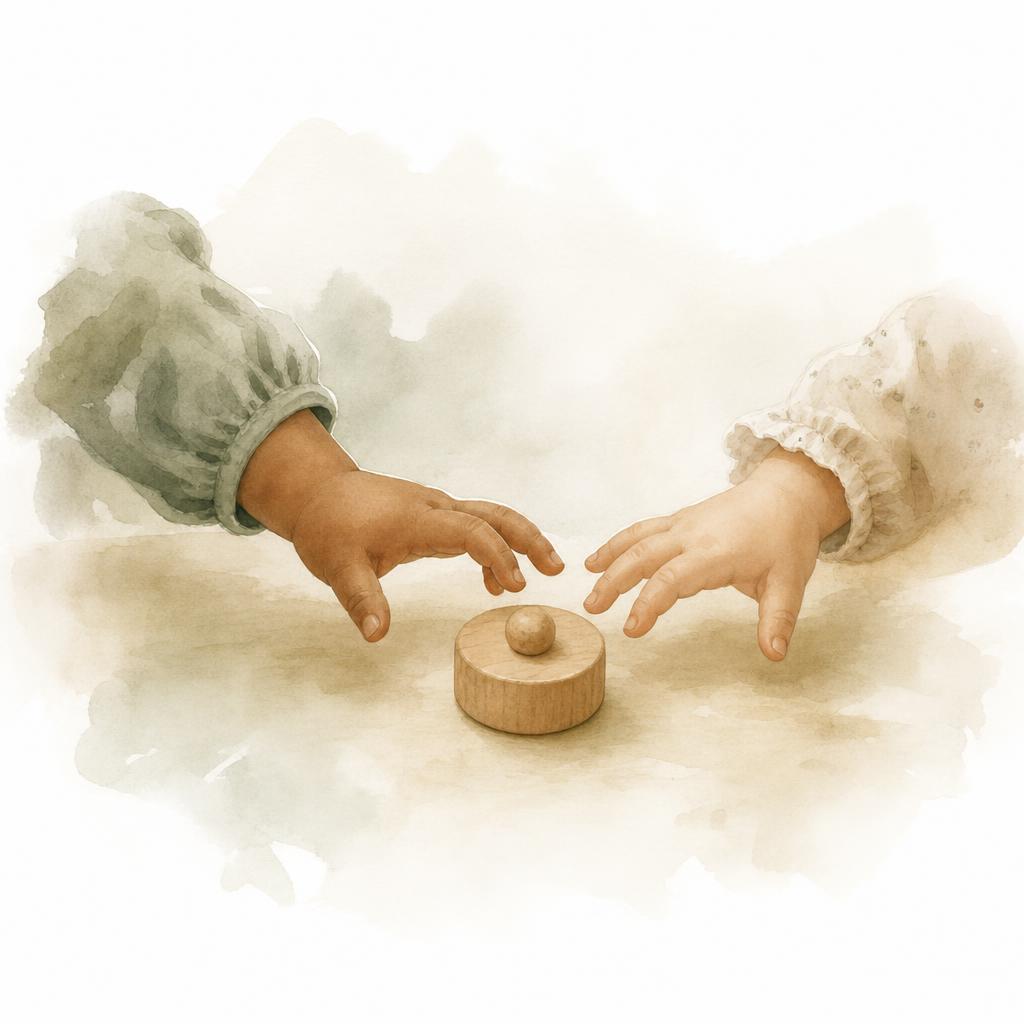
GRABBING A TOY
They see it. They want it. Waiting is still very hard.
This isn’t automatically unkind behavior. The desire is moving faster than the child’s language and impulse control.
- Turn-taking.
- Simple words.
- Asking for help.
- Beginning to wait.
“My turn.” “Help.” “Can I have it?”
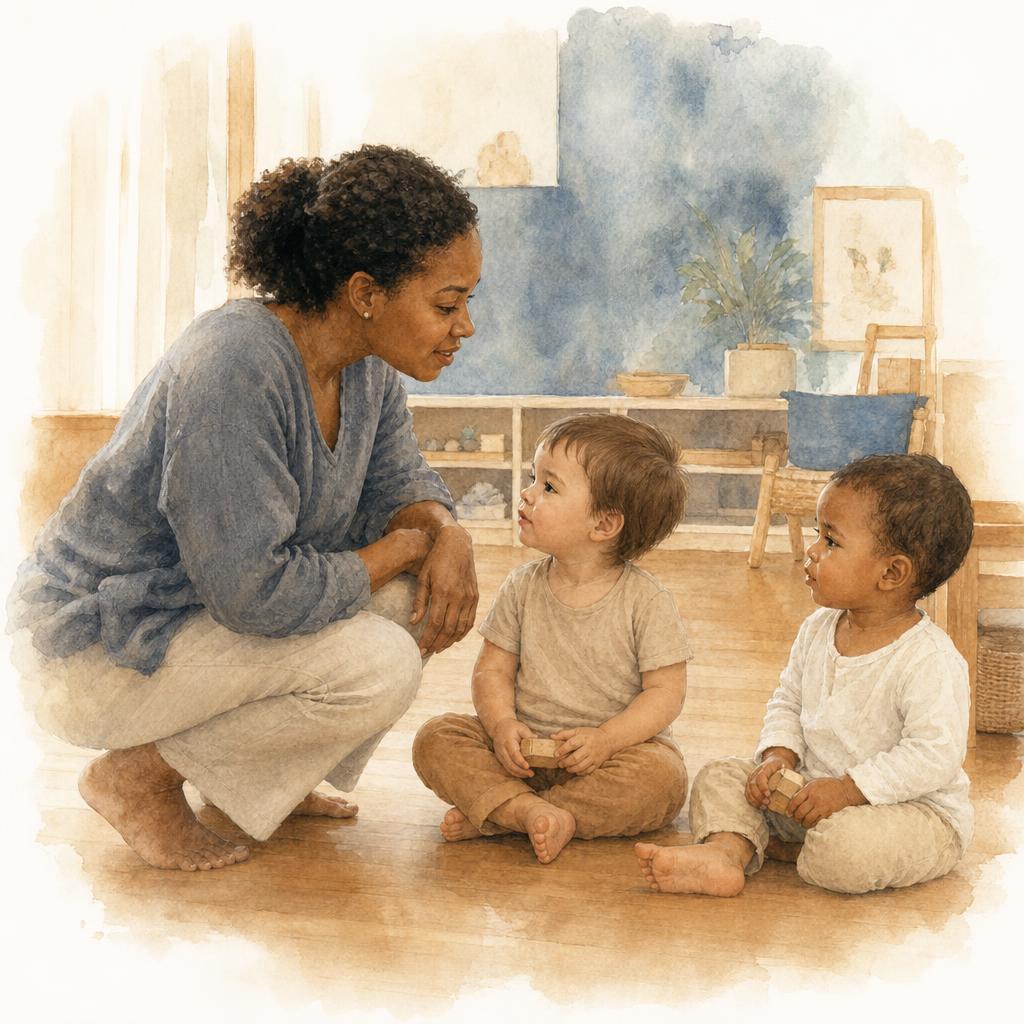
HITTING OR PUSHING
Sometimes big feelings move faster than words and self-control.
Teachers stop the behavior, keep everyone safe, and then help the child understand what happened and practice another way to respond.
- “Stop.”
- “My turn.”
- “I don’t like that.”
- Asking a teacher for help.
- Using words instead of hands.
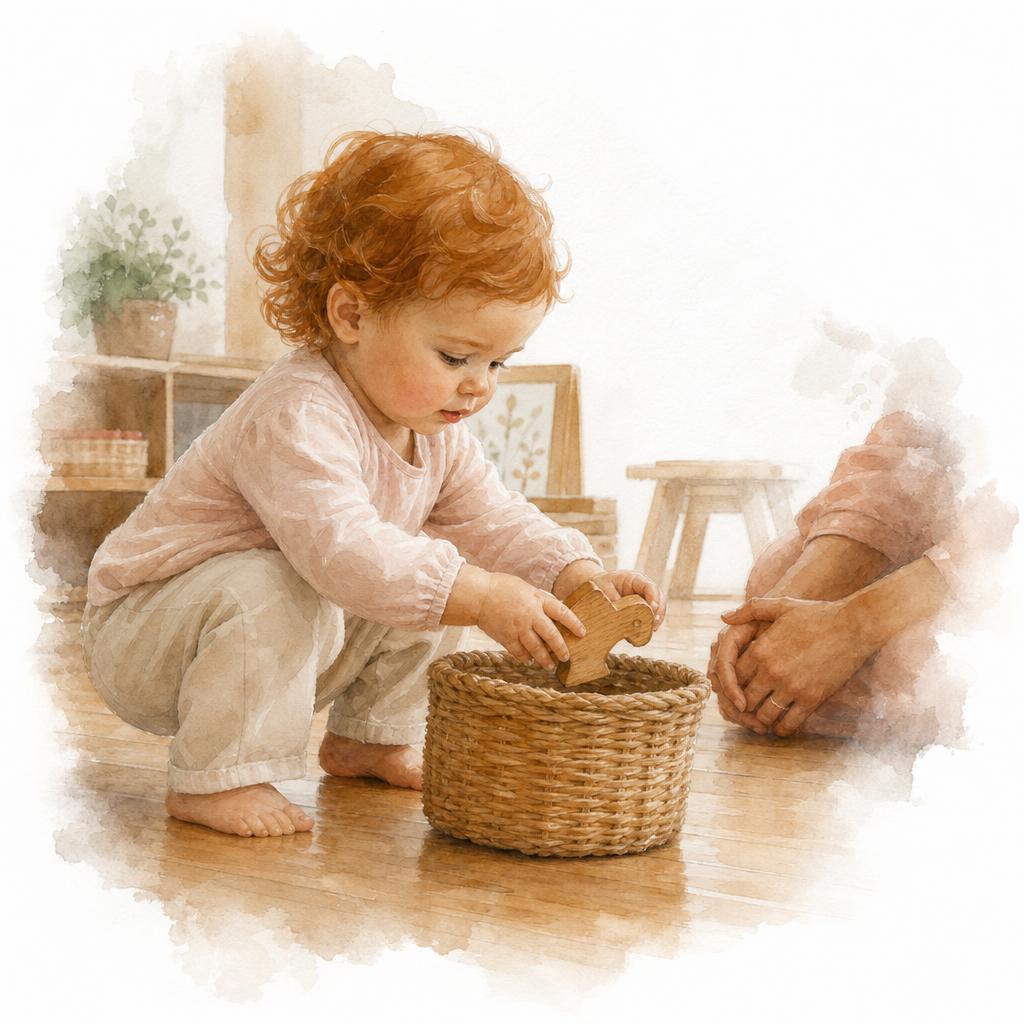
A MELTDOWN DURING A TRANSITION
Stopping something enjoyable and moving into something new can be genuinely difficult for a toddler.
A familiar expectation, a simple direction, and a reminder about what comes next can make the change easier.
- Finishing an activity.
- Moving into what comes next.
- Following a simple direction.
- Beginning to anticipate the next step.
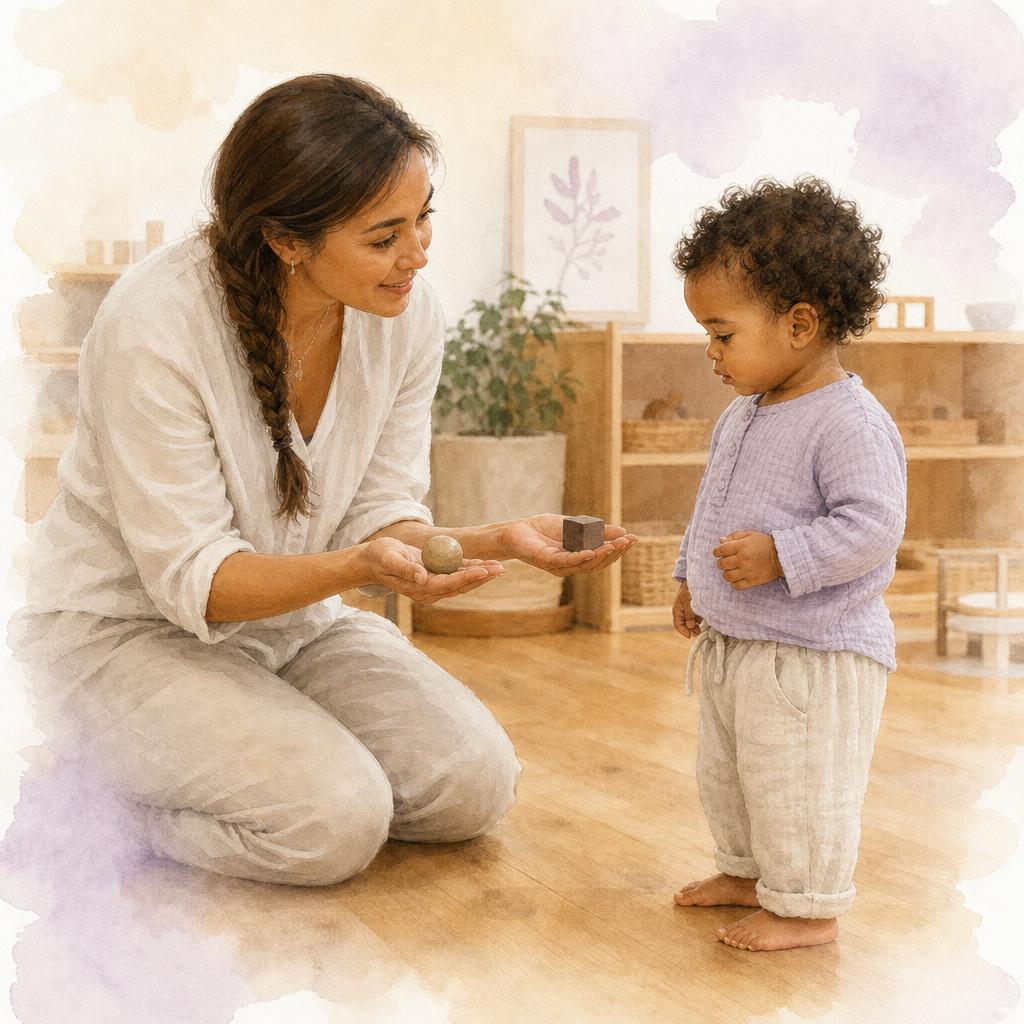
“NO!”
Sometimes “no” is exactly what it sounds like — growing independence. Toddlers are discovering they have opinions and can affect what happens around them.
We respect that growing independence without handing over every boundary.
- Choices within clear limits.
- Cooperation.
- Simple decision-making.
- Gradually increasing self-control.
“You can walk to the table, or I can help you.”
We don’t just stop the behavior.
We teach the skill that’s missing.
A teacher who understands child development sees these moments differently. Instead of expecting a toddler to behave like an older child, we meet them where they are developmentally while continuing to raise the expectation as they’re ready.
EMERGENT CURRICULUM
We start with what catches their attention.
Toddlers are very good at showing us what interests them. It might be a truck outside the window, an animal in a book, water pouring from one container to another, a color they suddenly notice everywhere, or the same song they want to hear again and again.
Our teachers pay attention to those interests and use them to plan what comes next.
A truck outside may lead to new words, counting, a book, movement, or an art idea about where vehicles go. At the water table, tipping, pouring, and measuring can open questions about amount and cause and effect.
The interest gives us a place to begin.
A teacher notices where it can go next.
The child gives us a place to begin. A teacher brings the words, materials, and next question that can keep the interest going.
WHAT CATCHES THEIR ATTENTION
A truck outside.
A TEACHER LEANS IN
“What do you see?”
“Where is it going?”
“What sound does it make?”
WHERE THE IDEA CAN GO
SPANISH STARTS HERE, TOO.
SPANISH STARTS HERE, TOO.
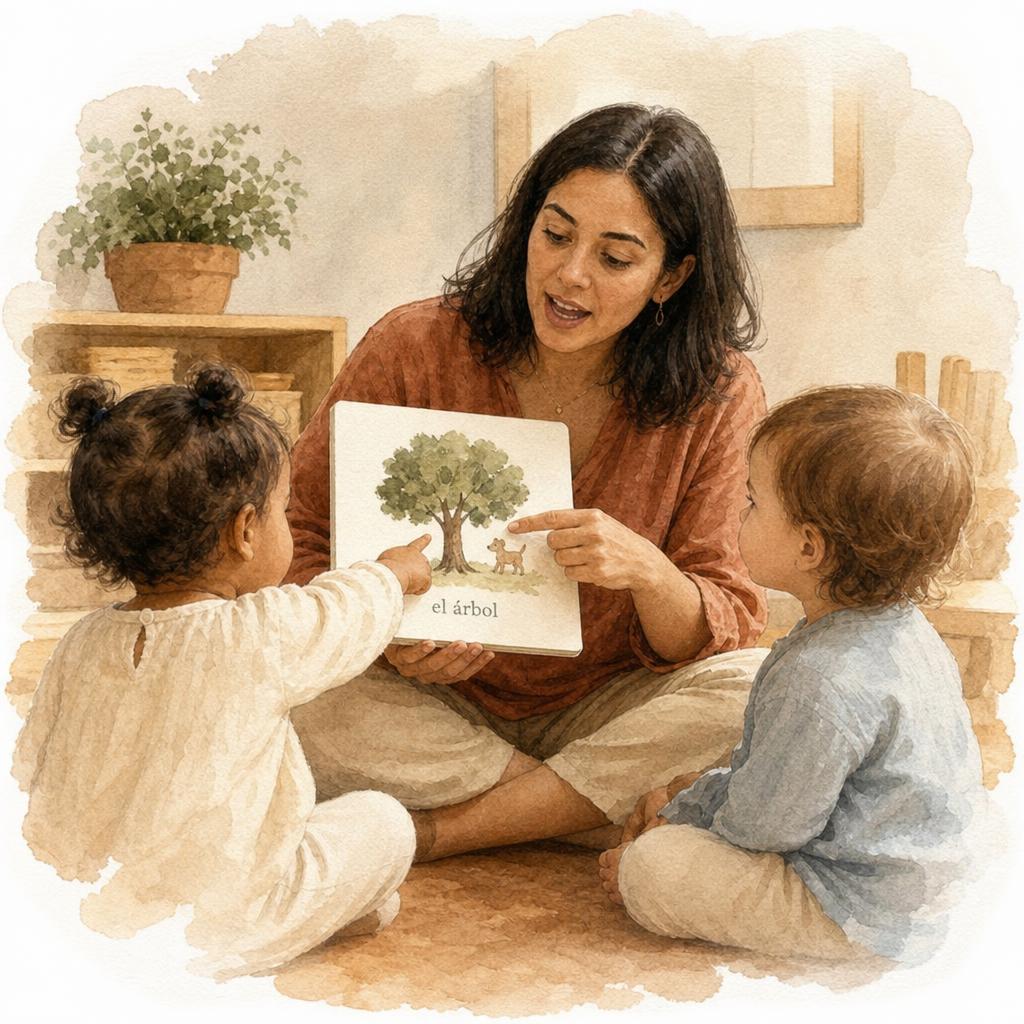
Toddlerhood is when we begin introducing Spanish more deliberately. A dedicated Spanish teacher works with the children using familiar words, songs, repetition, movement, and simple concepts.
We don’t expect a toddler to suddenly become fluent in Spanish. The goal at this stage is familiarity — hearing different sounds, beginning to connect words with meaning, and becoming comfortable experiencing another language.
As children continue through L&L, that early exposure gives us something to keep building on.
DID YOU KNOW?
Being exposed to more than one language does not cause language delays. Young children can learn words and communication across more than one language, and the first three years are a period of especially rapid language and brain development.
MUSIC DAY FEELS DIFFERENT.
Each week, outside music specialists come into L&L to work with the children. These are teachers whose experience is centered specifically in music, and they bring planned music experiences created for young children.
For toddlers, that means movement. They sing. They clap. They move their bodies. They experiment with sound. They begin following movement patterns and participating together.
And most importantly — they love it. Music day becomes one of those familiar parts of the week that children begin to recognize and look forward to.
DID YOU KNOW?
Music and movement aren’t only fun. Singing, dancing, and shared music experiences can support young children’s language, social-emotional, cognitive, and communication development.

A DAY THEY CAN BEGIN TO UNDERSTAND
Knowing what comes next helps toddlers feel secure.
Toddlers don’t always love stopping what they’re doing — especially when what they’re doing is extremely important, like carrying the same wooden truck around the room for the twenty-third time. That’s why a familiar schedule matters.
When the order of the day stays consistent, children begin recognizing what comes next. At first that mostly means fewer surprises during transitions. With repetition, they start to anticipate. Over time, they begin participating more independently.
The schedule isn’t just how we organize the day. It’s one of the ways we teach children how to move through it.
WE COME TOGETHER
Children reconnect with teachers, enter the classroom, and settle into familiar materials. The group comes together for circle time — songs, stories, language, and ideas that carry through the day. Snack follows as a familiar early transition.

WE MOVE & EXPLORE
Toddlers need to move. Outdoor time gives children space to walk, climb, explore, use their bodies, and sometimes carry classroom interests beyond the classroom walls.

WE LEARN & PRACTICE
Teachers prepare activities connected to what children are learning. Children make choices about where they want to work. Lunch, rest, and an afternoon group time round out the midday — each a familiar part of the day with growing opportunities to participate.
WE MOVE, CHOOSE & RECONNECT
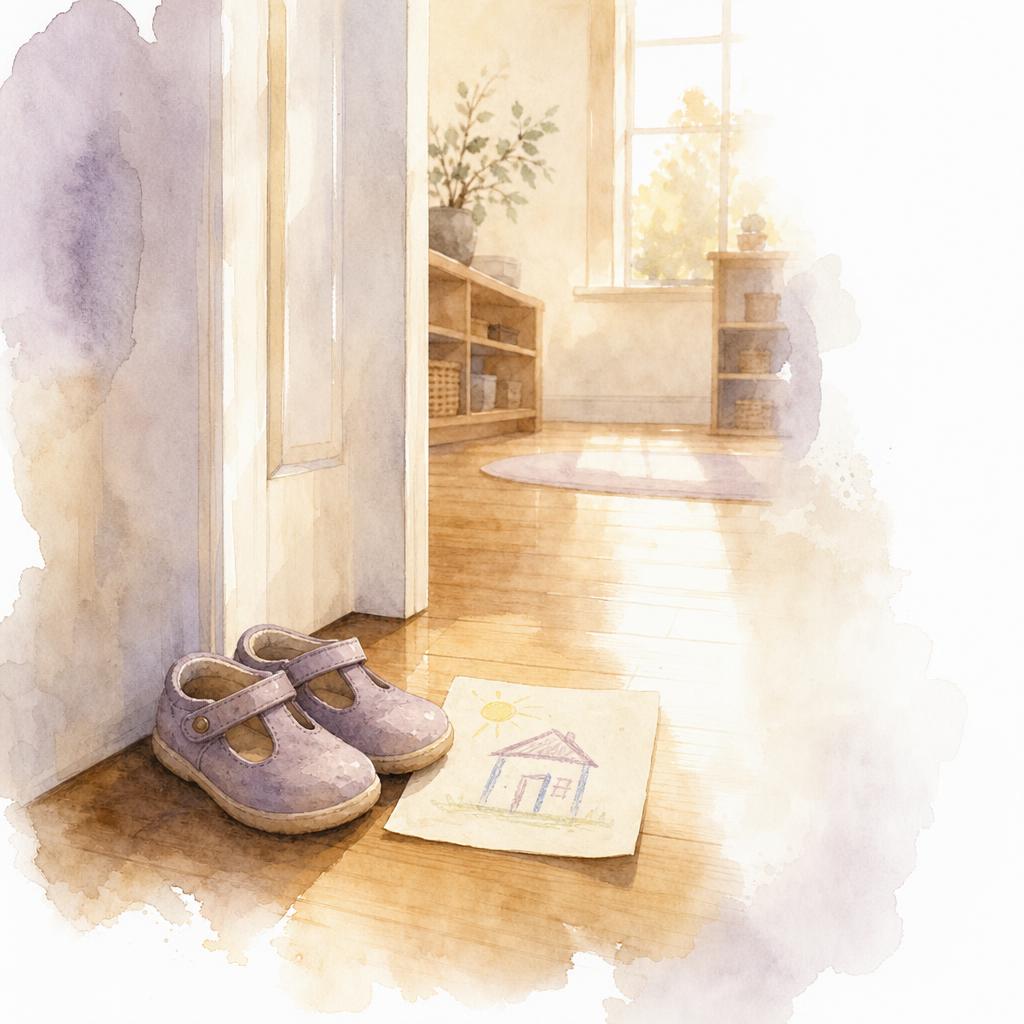
The afternoon returns outdoors, then back inside for more time with materials, friends, and independent choice. Toward the end of the day, the pace softens as families arrive and children reconnect with the people they’ve been waiting for.
First they learn what comes next.
Then they begin learning what to do next.
GROWING INDEPENDENCE
“I can do it.”
Sometimes we let them try.
Toddlerhood brings a very strong desire to participate. Children want to carry the cup, put the toy away, wash their own hands, choose where to work, and attempt things that would be much faster if an adult simply did them.
But faster isn’t always the goal.
When it is safe and appropriate, teachers give toddlers time to try. Those small everyday opportunities build confidence, coordination, understanding, and the beginning of responsibility for themselves and the classroom around them.

TRY
Caring for themselves
Feeding themselves · Washing hands · Attempting simple clothing tasks
Every small attempt says, “I can be part of this.”

CHOOSE
Simple choices, clear boundaries
Toddlers need opportunities to make decisions — but not every decision. Teachers offer simple, appropriate choices inside clear boundaries.
“You can sit here or here.”
“Do you want the blue one or the green one?”
“You can walk, or I can help you.”
HELP
Caring for the classroom
Putting things away · Bringing a cup · Helping clean up
Children begin understanding that they are part of a group and can contribute to the space around them.

DO MORE
Following small directions
Understanding and following small directions allows toddlers to practice listening, remember what was asked, and participate more independently.
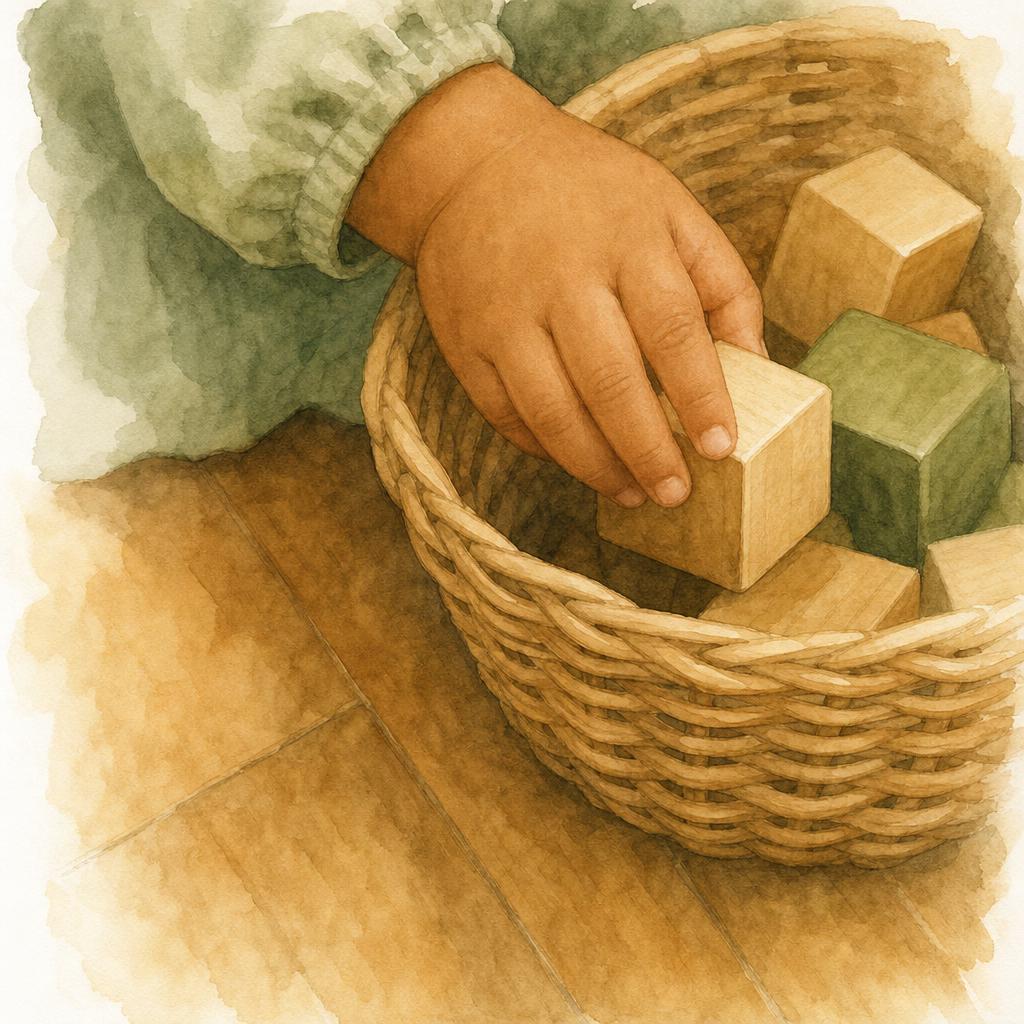
- “Put the block in the basket.”
- “Bring your cup.”
- “Shoes on.”
- “Come sit with us.”
- “First cleanup, then outside.”
WHEN THEY’RE READY
Potty learning is another step toward independence.
Children become ready for potty learning at different times. We do not believe in pushing a child simply because they have reached a particular age.
Teachers look for signs of readiness, talk with families about what they are seeing at school and at home, and work together so the expectations around the child are as consistent as possible.
When the child is ready, teachers support the process with familiar language, repetition, encouragement, and patience.
A child shouldn’t have one set of expectations at school and a completely different message at home. When new independence begins showing up — including potty learning — teachers and families talk about what is working so we can support the child together.
Independence doesn’t arrive all at once.
It grows every time a child realizes,
“I know what to do.”
TODDLER PROGRAM AT A GLANCE
The things families usually want to know.
AGES
14–24 months
Our Toddler Program supports children as they move from early independence into a more structured classroom day.
LEARNING APPROACH
Emergent curriculum + teacher-guided learning
Teachers notice what children are drawn to and use those interests to plan activities, language, movement, art, sensory experiences, and small-group learning.
DAILY STRUCTURE
Predictable schedule with room to move
Toddlers begin recognizing what comes next while still having plenty of time for movement, exploration, outdoor play, and choice.
SOCIAL & EMOTIONAL
Big feelings need guidance
Teachers help children begin naming emotions, practicing boundaries, using words and signs, taking turns, and learning what to do when something feels hard.
ENRICHMENT
Weekly Music + Spanish
Outside music specialists visit weekly, and children are introduced to Spanish through a dedicated teacher and familiar classroom experiences.
FAMILY CONNECTION
You stay connected
Brightwheel keeps families connected through photos, updates, and messages from teachers who want you to see what your child is up to.
NEXT STEP
Getting ready for the Two-Year-Old Program
As toddlers become more independent, teachers gradually introduce more group participation, longer activities, stronger classroom expectations, and new opportunities to do more for themselves.
FIND A SCHOOL
Explore Toddler Care at a school near you.
Program availability varies by location. Visit a school page to learn more about its community and offerings.
COME SEE TODDLERHOOD IN MOTION
Come see what toddlerhood
looks like here.

Toddlers can tell you a lot about a classroom before they have all the words.
Come watch how they move through the room. See how teachers get down to their level, how children are guided through big feelings, how they participate in the day, and how much pride can come from doing something all by themselves.
Most importantly, notice how it feels.
Can you picture your child walking through the door? Can you imagine the teachers getting to know their personality — what makes them laugh, what frustrates them, when they need help, and when they’re ready to try on their own?
That’s the part we want you to experience in person.
Start with a short inquiry to see tuition information, then choose an available tour time.
Request a TourBig feelings. Big opinions.
So much growing in between.