
INFANT CARE · 0–14 MONTHS
Infant Care in Wicker Park, Chicago
Leaving them with someone new is a big first, too.
Those first months are full of changes — new sounds, new movements, new ways of communicating, and new ways of showing you exactly what they need. Our infant teachers take the time to learn those little cues, build familiar relationships, and create a day that supports both who your child is now and what they may be ready to discover next.
A baby may first know Wicker Park as light moving across the stroller canopy or a familiar voice naming what passes by. The neighborhood comes closer in small moments, with a trusted teacher there to share them.
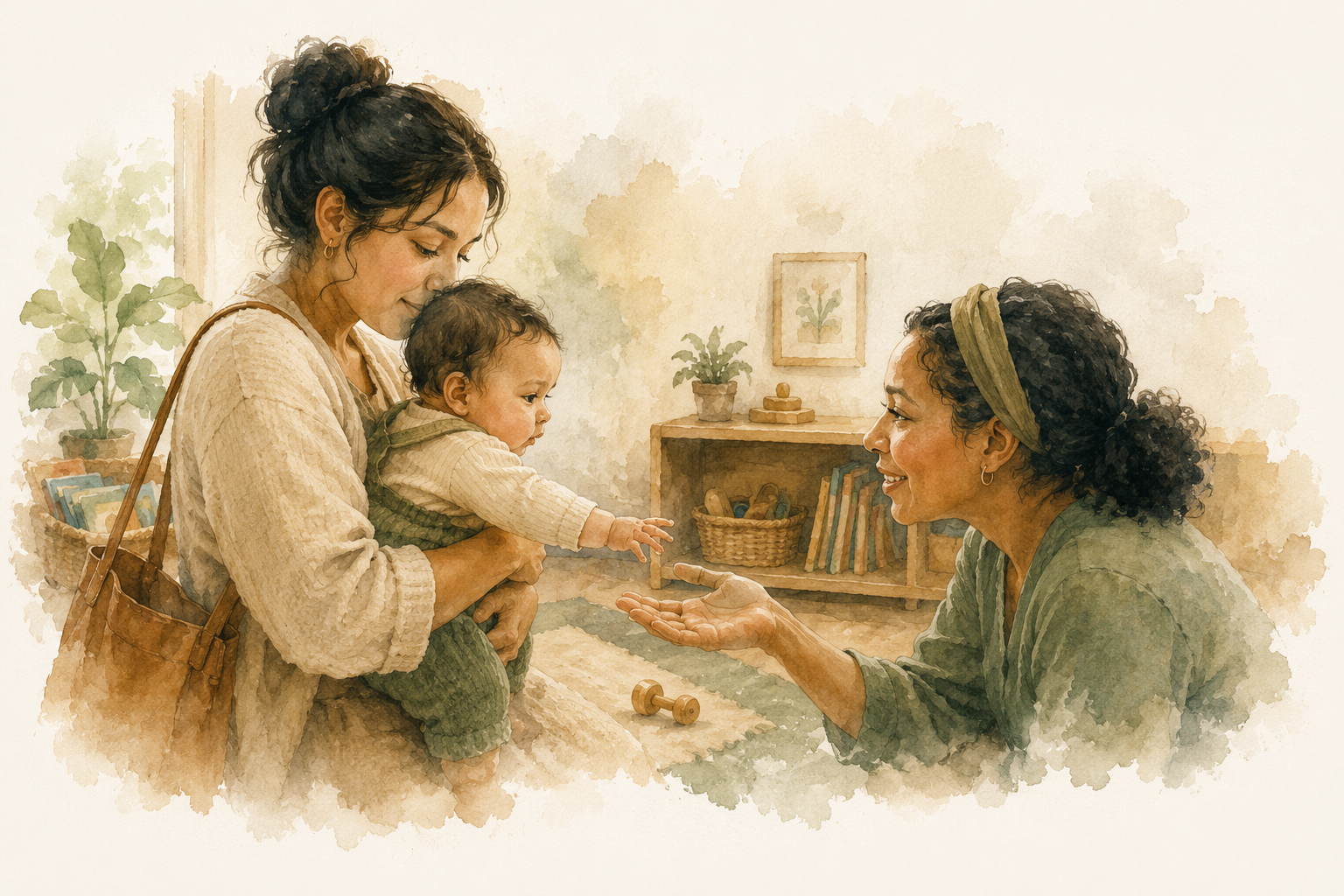
IT STARTS WITH KNOWING YOUR CHILD
Tell us about your infant. We really want to know.
Infants communicate long before they have words. They tell us when they're tired, what settles them, and what makes them curious — through their expressions, their movements, their sounds, and the small cues teachers begin to notice. Before your child begins, we want to understand all of it.
What makes them smile?
How do they tell you they're tired?
What settles them?
What does hungry look like for them?
What are they working on with their body right now?
What catches their attention?
What familiar routines help them feel secure?
The more we know about your child, the more familiar and personal their day can begin to feel.
RIE-INSPIRED INFANT CARE
Respect shows up in the smallest moments.
Our infant classrooms draw on RIE principles: respect, responsive care, close observation, freedom to move, and treating each infant as an active participant in their own care. You can see those principles in the ordinary moments of the day.
Before we pick them up
Before lifting an infant, a teacher lets them know what is about to happen. That pause gives the child a chance to notice, respond, and prepare. Small moments like this are where trust starts.
When they're upset
A teacher responds and comforts while paying attention to the child's particular way of communicating. With time, sounds, expressions, movements, and cries become more familiar, helping the teacher understand what this infant may be telling them.
During feeding and diapering
Feeding and diapering are time to be together, not tasks to hurry through. A teacher talks with the infant, makes eye contact, notices their cues, and invites them into what is happening. The relationship grows in these everyday moments.
When they're exploring
Sometimes an infant is ready for something new; sometimes they need another minute with what is already in front of them. Teachers watch closely, offer help when it is useful, and choose what to place within reach next.
We respect each infant’s individual pace.
We also actively teach.
GROWING, ONE NEW SKILL AT A TIME
We know where they are — and what may be coming next.
Every infant develops at their own pace, and we stay right there with them. A teacher notices a new reach, a steadier sit, or a sound that is becoming communication and keeps in mind what may be beginning next. Those observations guide what we place nearby and the experiences we offer, giving each child room to practice what they are ready for.


We don't rush the next milestone. We make sure we're ready for it.
FREEDOM TO MOVE
Their bodies are learning, too.
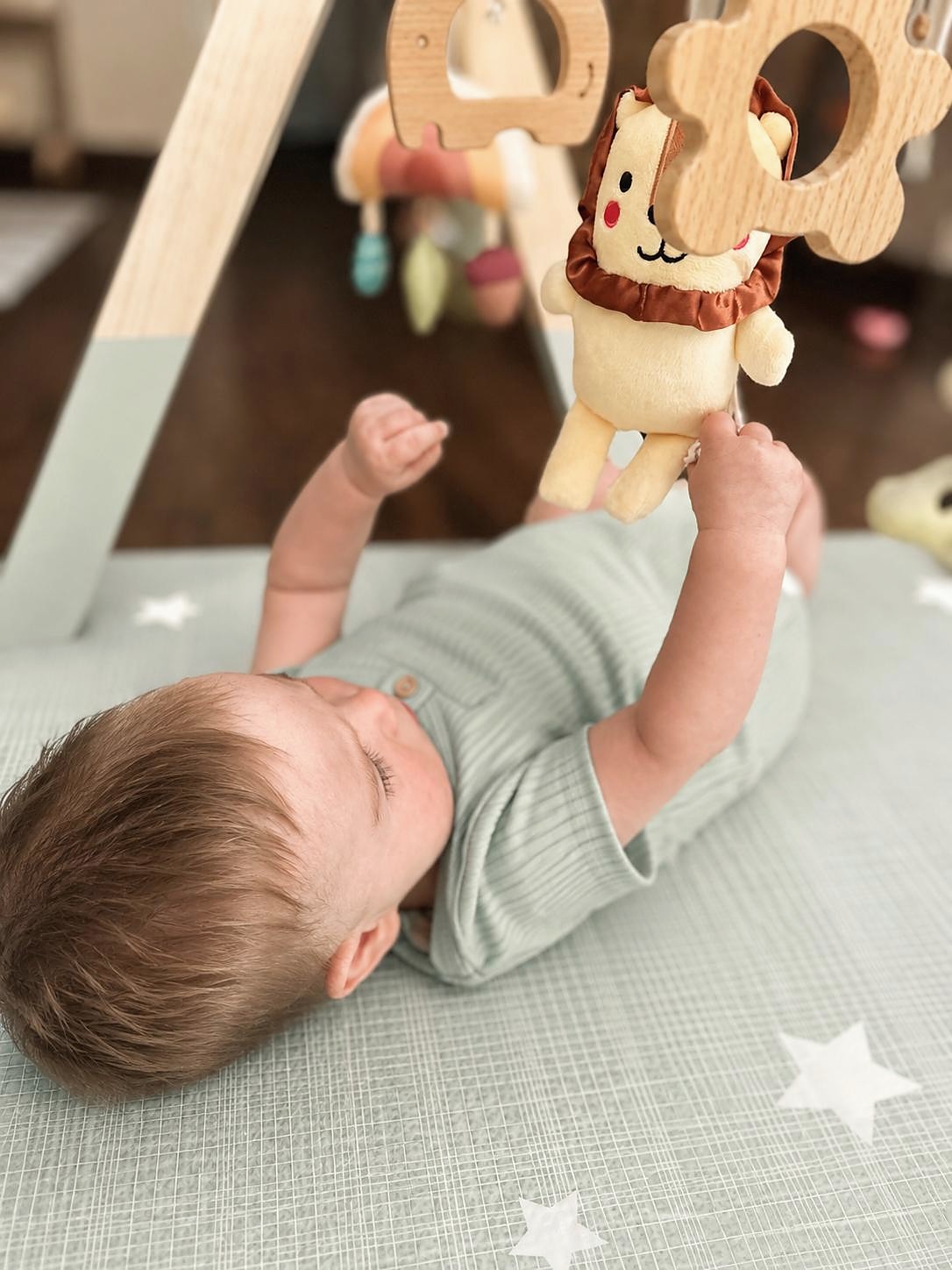
Infants spend meaningful time on the floor, where they have room to stretch, reach, roll, pivot, crawl, and eventually begin pulling themselves up when their bodies are ready. Rather than placing children into positions they haven't reached on their own, teachers create safe spaces that invite movement and give infants time to discover what their bodies can do.
That freedom matters. A toy placed just within reach can invite an infant to stretch a little farther. An open area can become the place where rolling turns into crawling. Teachers stay close, observe carefully, and adjust the environment as new abilities begin to emerge.

WHAT FREEDOM TO MOVE LOOKS LIKE HERE
01
Floor Time First
Infants have open space to reach, roll, pivot, crawl, and explore — not time spent waiting to be held or positioned.
02
No Propping
We don't routinely place infants into sitting or standing positions they haven't reached independently.
03
Room to Move
We prioritize open floor movement rather than relying on equipment that restricts how infants can use their bodies.
04
Teachers Stay Close
Teachers observe, support, and adjust the environment as each infant develops new abilities.
We create the opportunity. Their bodies do the learning.
COMMUNICATION STARTS BEFORE WORDS
Long before they can say it, they're already telling us so much.

Infants communicate from the very beginning. A look, a sound, a reach, or a change in expression can tell us what interests them, what they need, or when they have had enough. Teachers get to know those individual cues and answer them throughout the day.
We give infants many chances to connect meaning with language. Teachers name what is happening, read stories, sing, and pair familiar words with simple signs. Little by little, a gesture, a spoken word, and an experience begin to fit together, giving infants another way to be understood before speech develops.
WE SPEAK
During care and play, teachers name the people, objects, feelings, and small changes an infant is noticing.
WE SIGN
A simple sign can sit alongside a familiar word, giving an infant another way to share an idea before they can say it.
WE LISTEN
A sound, gesture, expression, or movement carries a message. Teachers listen for what those cues mean for this particular child.
THEY RESPOND
A familiar gesture becomes easier to understand; a sound becomes more purposeful; a sign may arrive before a spoken word. The conversation keeps growing.
We don't wait for words to start the conversation.
THROUGH THE FIRST YEAR
Their first year changes quickly. So does their day.
There isn't one version of an infant day. Teachers notice what each child can do today and what they may be ready to try next. As children become more mobile, communicative, and independent, the experiences and familiar routines of the day change with them.
EARLY INFANCY
At first, the day follows their cues.
- —Close one-on-one care woven through the day.
- —Open floor time for reaching, grasping, and discovering movement.
- —Feeding that follows each child's individual needs.
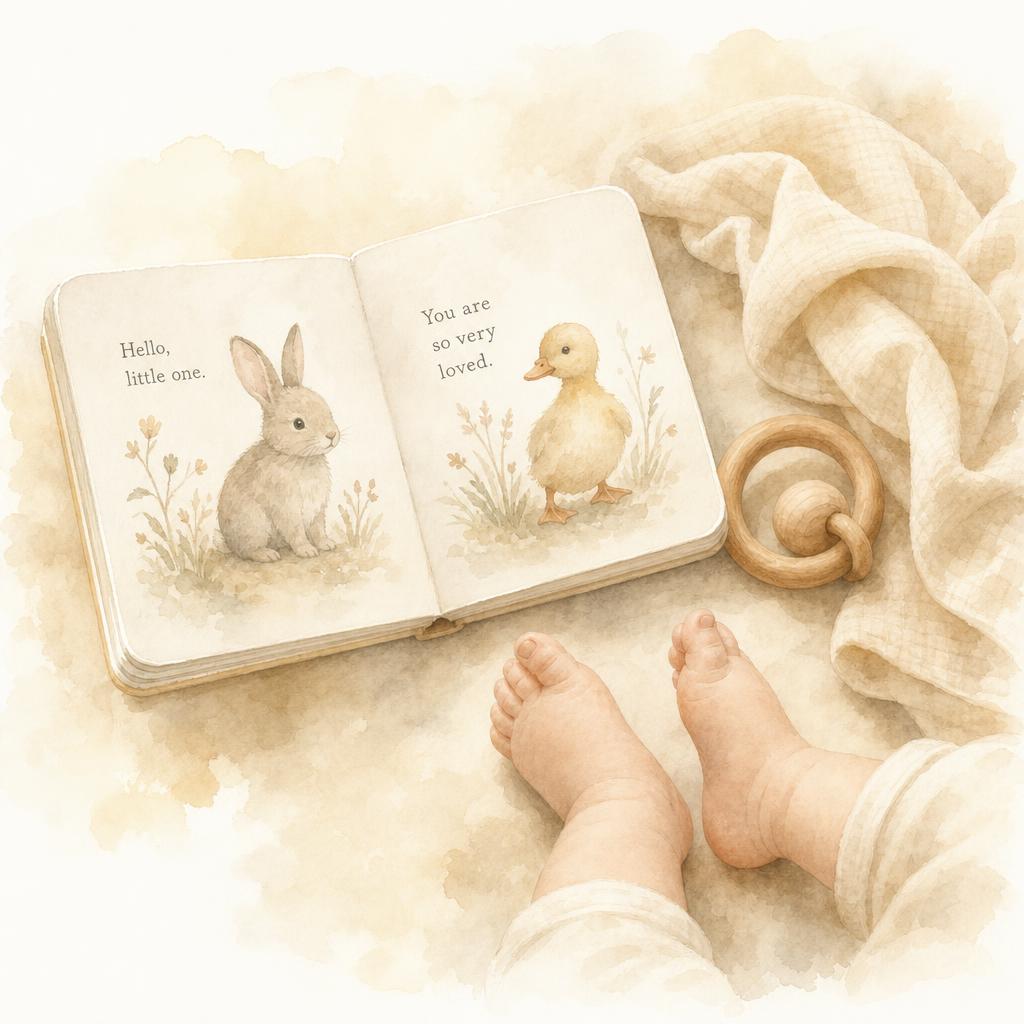
- —Books, songs, spoken language, and simple signs.
Some babies need several little naps throughout the day. At this stage, we follow the child rather than asking the child to follow our schedule.
GROWING INDEPENDENCE
As their abilities grow, the classroom opens up.
- —Planned activities stretch a little further as abilities grow.
- —Grasping turns into new ways to use and explore materials.
- —Art offers a chance to discover cause and effect.
- —New mobility makes more of the classroom available to investigate.
The same material can become an entirely different experience a few months later. That change is one of the things teachers are watching for.

GETTING READY FOR TODDLERHOOD
A little more structure starts to make sense.
- —Walking and increased mobility change how children use the classroom.
- —Planned activities can become more sustained and involved.
- —Children begin participating in more group experiences.
- —Familiar routines and simple boundaries support growing independence.
As children become steadier and more independent, teachers give them a little more room to try things for themselves.

SLEEP CHANGES TOO
Sleep changes throughout the first year, too. Younger infants may need several nap pockets during the day. As children move closer to toddlerhood, teachers and families gradually work toward the more consistent one-nap schedule they will eventually experience in the Toddler classroom. That change happens over time — we don't expect every child to make it on the same day or in exactly the same way.
YOUR FIRST YEAR, TOO
You don't have to figure every change out alone.
The first year brings a lot of questions — sleep changes, new movement, communication, routines, boundaries, and eventually the transition into toddlerhood. Our infant teachers have guided many children through these stages, and that experience becomes a resource for families, too.
We share what we're noticing, talk through changes, and work with families as their child's needs evolve. Our role isn't to tell parents how to parent. It's to be an experienced partner who knows their child and can help make some of those first-year changes feel a little easier to navigate.
WHEN YOU'RE NOT HERE
You shouldn't have to spend your day wondering.
Leaving your infant at school means trusting someone else with all the little moments you would normally be there to see. We want families to feel connected to those moments — and confident that teachers are paying attention when something changes.
WHEN THEY'RE UPSET
Teachers respond, comfort, and pay attention to what your child's sounds, expressions, and movements may be telling them. As the relationship grows, teachers get better at recognizing those individual cues.

WHEN THEY NEED TO SLEEP
We follow each infant's changing sleep needs and work with families as those needs change throughout the first year.

WHEN YOU MISS THEM
Brightwheel helps keep you connected through photos, updates, and messages, giving you glimpses of what your child is experiencing while you're apart.

WHEN SOMETHING CHANGES
A new nap pattern. A new movement. A new sign. A new frustration. Teachers share what they're noticing and talk with families about what they're seeing at school.
You may not be in the room, but you're still part of their day.
SAFETY & CARE
The details matter even more when they're this little.
Infant safety lives in the everyday details — how children sleep, how bottles are handled, who can enter the building, who can pick up your child, and whether the people around them know what to do in an emergency.
01
Safe sleep
Infants are placed on their backs to sleep, with no blankets, toys, or loose items in the sleep space. Our infant staff also complete required SIDS and Shaken Baby Syndrome training, along with recurring safe-sleep training.
02
Clearly labeled feeding
Families provide their child's formula or breast milk, and bottles are clearly labeled to help ensure each infant receives what was prepared for them. As feeding needs change, teachers communicate with families about what they're noticing.
03
Clean throughout the day
Families provide their child's diapers. Teachers clean and sanitize changing areas throughout the day and follow the school's established cleaning procedures to keep infant spaces cared for and ready for the next little explorer.
04
CPR isn't just for a few people here.
L&L's standard is for every staff member to become CPR certified — not only the minimum number required to be present under state licensing rules. We hold CPR certification opportunities during the year so newer team members can complete their training too.
05
A 1:4 infant ratio
Illinois requires one staff member for every four infants, and L&L follows that standard. At certain parts of the day, including transitions, additional adults may be present to help the classroom run smoothly.
06
Knowing who is coming through the door
Families use individual access codes to enter the school. When someone new arrives to pick up a child, staff confirm that the person is authorized before the child is released. Families are asked to communicate new authorized pickup people so we can make sure every handoff is handled correctly.
Allergies & medication
As allergies or medical needs arise, we work with families and follow the child's medical documentation. Medication is administered according to the required authorization and instructions provided for the child.
INFANT CARE AT A GLANCE
The things families usually want to know.
Ages
0–14 months
Our Infant program supports children through the first year and their transition toward toddlerhood.
Approach
RIE-inspired infant care
Responsive caregiving, freedom of movement, close observation, and planned learning that changes as your child grows.
Curriculum
Planned learning every day
Books, language, sign language, music, sensory exploration, early art, movement, and experiences selected around emerging skills.
Movement
Floor time & freedom to move
Infants have room to reach, roll, pivot, crawl, pull up, and explore as those abilities emerge.
Communication
Spoken language + simple signs
Teachers pair words with signs and pay close attention to the sounds, gestures, expressions, and movements infants use to communicate.
Family connection
Brightwheel
Photos, updates, and messages help families stay connected while they're apart.
Safety
Safe-sleep practices, clearly labeled bottles, 1:4 infant ratio, CPR-certified staff standard, and authorized building and pickup access.
Infant Care in Wicker Park
A wider world, held close.
From the stroller, a baby might watch sunlight move across a storefront window and then turn toward the teacher who names it. Fresh air and a familiar voice make the neighborhood part of a widening world without asking the baby to take in too much at once.
At an appropriate outdoor space, a baby may come out of the stroller to sit, reach, look, or move in a way that fits their development. A simple material brought from school can feel different on the grass, giving the baby something new to study with a teacher close by.
Familiarity grows slowly
Seeing the same block or face again can become part of how a baby begins recognizing the world beyond the classroom.
A familiar object, a new setting
Taking one simple material outdoors changes the light, sound, and surface around it while the object itself remains known.
Belonging can grow with the family
Starting infant care does not have to pull parents away from the neighborhood they chose. A familiar person near Wicker Park’s gardens or a family event can become part of a baby’s earliest sense of place.
COME SEE INFANT CARE UP CLOSE
Come see how it feels when you're standing in the room.

There is only so much a website can show you. Step into an infant classroom and notice the little things — how teachers speak with children, how they respond to cues, how the room gives infants space to move, and how learning is built into everyday moments.
Most importantly, give yourself the chance to decide how it feels. Can you picture your child here? Do you feel comfortable with the people in the room? Does the way we care for and teach infants align with what matters to your family? Those are questions a website can't answer for you.
Start with a short inquiry to see tuition information right away, then choose a tour time from our available calendar. Current and upcoming openings are discussed when you visit.