PRESCHOOL & PRE-K • AGES 3–5
Preschool & Pre-K in Bucktown
Growing Thinkers. Confident Learners. Ready for What Comes Next.
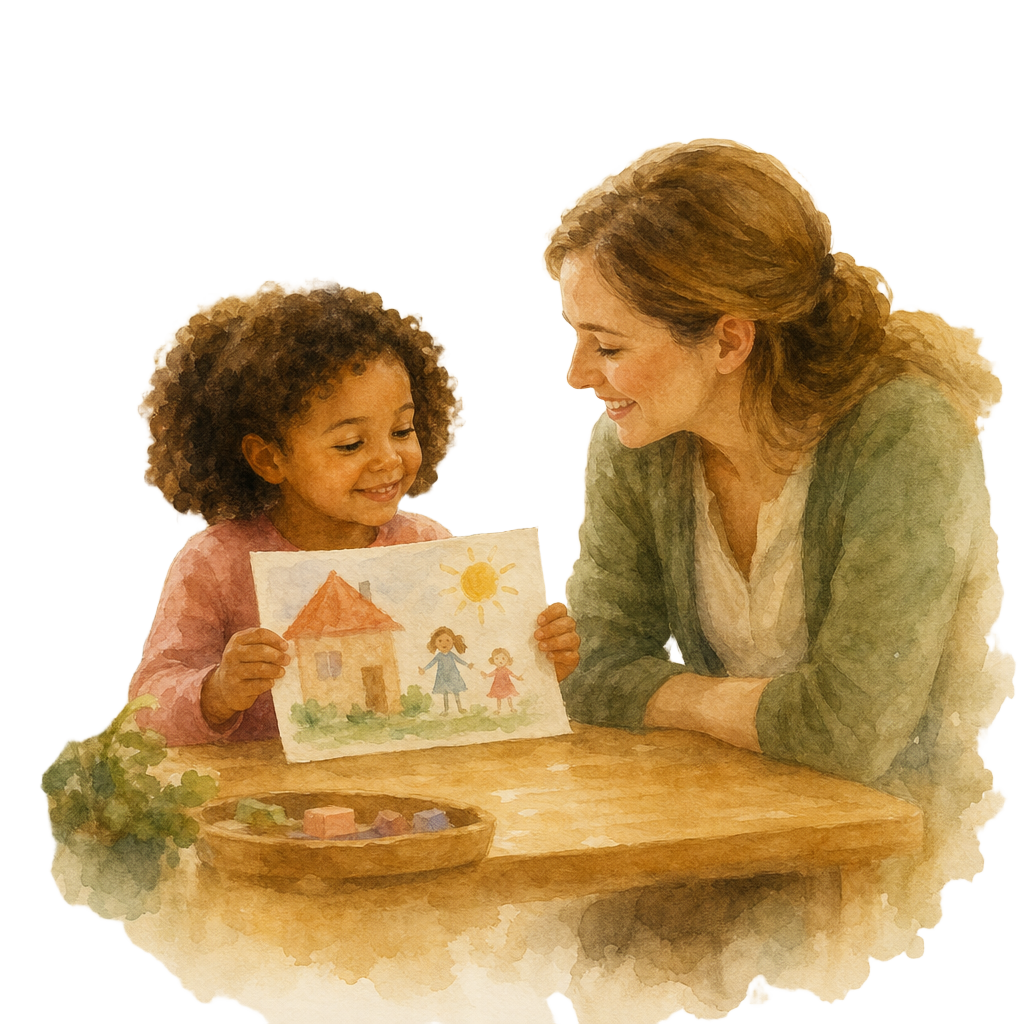
Three-year-olds arrive full of questions they’re just beginning to put into words. By Pre-K, those same children are negotiating, explaining their reasoning, and taking on challenges they couldn’t have imagined two years earlier. Our classrooms give children the time, the materials, and the kind of teaching that makes that growth possible.
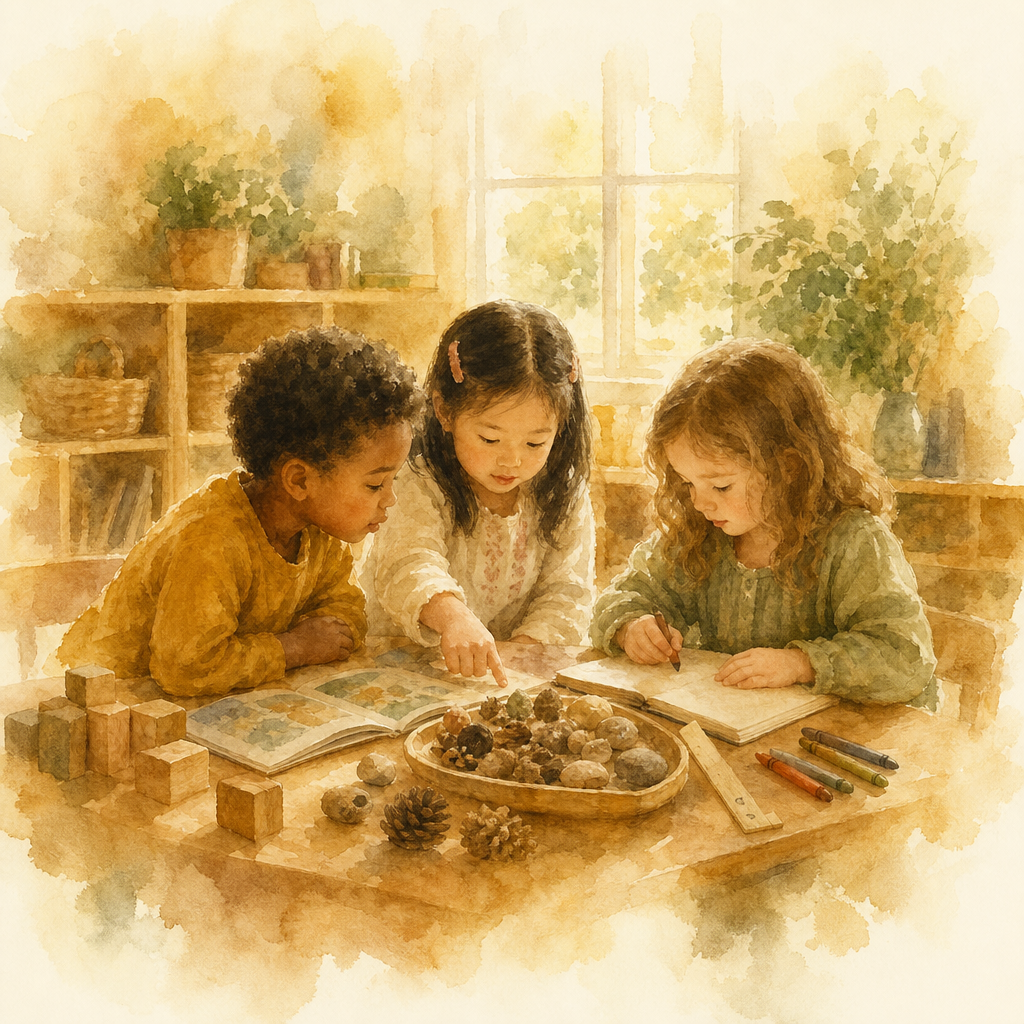
At Bucktown, we love watching a child’s question turn into something bigger. An idea that starts during a conversation might show up later in their artwork, their block building, their pretend play, or even on a walk through the neighborhood. Our teachers notice those connections and find ways to keep the thinking going—asking questions, adding new materials, and giving children time to explore an idea with their friends.
More Than Kindergarten Preparation
A good preschool classroom has a predictable enough structure that children feel free to take risks inside it. Within that structure, there’s real depth. Children in our rooms are working on things—building something, writing something, figuring something out—not waiting to be shown what to do next.
Letters, numbers, and early literacy are part of every day. But so is learning to disagree respectfully, to manage frustration, to finish what you started. Teachers pay close attention to where each child is and introduce challenges that are just far enough ahead to stretch their thinking. That’s what carries into kindergarten.
01
Complex Thinking
Children return to ideas across days, not just hours. A question raised on Monday might still be generating new thinking by Friday.
02
Confident Communication
We give children real things to talk about—explaining a drawing, disagreeing with a friend, talking a teacher through what they’re trying to build.
03
Growing Independence
Children pour their own water, choose their own work, and ask for help when they need it. We take that seriously—it’s one of the most useful things a child can bring to kindergarten.
04
Learning Together
Four-year-olds are genuinely working on friendship—making plans, sharing materials, coming back after a disagreement. Teachers help that process without taking it over.
Learning That Begins With Curiosity
A walk through Bucktown might begin with children noticing work on a building, a mural they have passed before, or the shape of a bridge over the 606. They ask why something changed, how it was made, who works there, or where a train is going. A teacher listens for the question children want to keep thinking about.
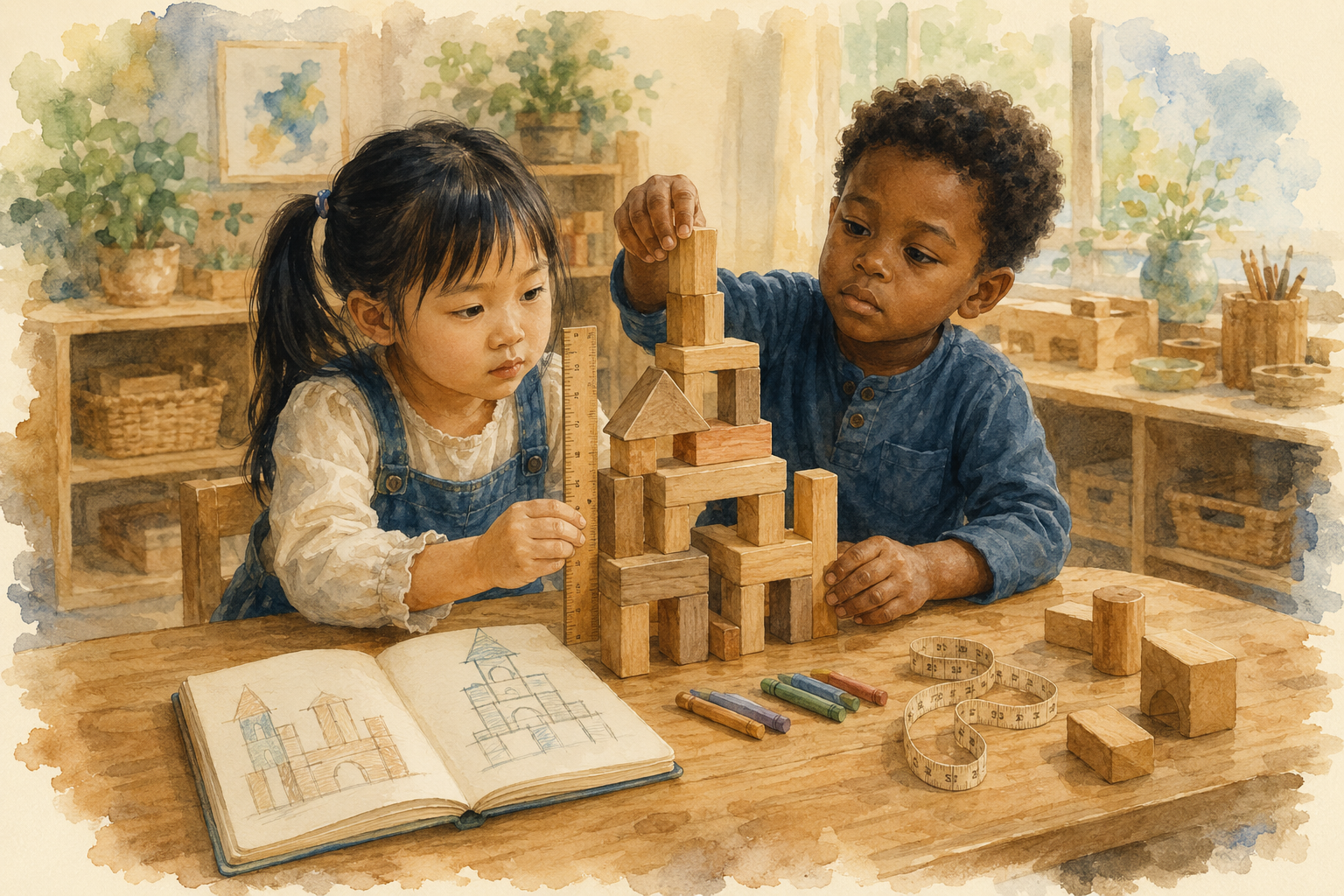
Back in the classroom, that question can lead to books and photographs, plans and signs, counting and measuring, block structures, maps, paint, clay, and problems children need to solve together. Reading, writing, mathematics, art, and problem-solving become useful because children need them to understand and share the idea.
When children return outside, they see the familiar place differently. They may notice a new detail in the mural, compare a bridge shape with the one they built, or check what has changed at the construction site. The neighborhood gives them something real to keep observing, questioning, and revisiting.
Learning That Begins With Curiosity
A walk through Bucktown might begin with children noticing work on a building, a mural they have passed before, or the shape of a bridge over the 606. They ask why something changed, how it was made, who works there, or where a train is going. A teacher listens for the question children want to keep thinking about.
Back in the classroom, that question can lead to books and photographs, plans and signs, counting and measuring, block structures, maps, paint, clay, and problems children need to solve together. Reading, writing, mathematics, art, and problem-solving become useful because children need them to understand and share the idea.
When children return outside, they see the familiar place differently. They may notice a new detail in the mural, compare a bridge shape with the one they built, or check what has changed at the construction site. The neighborhood gives them something real to keep observing, questioning, and revisiting.
How Learning Grows
Children move through the Preschool and Pre-K years at their own pace, building on what they know and what they’re ready to take on next.
The arc from three-year-old Preschool through Pre-K is real and meaningful—here is what that progression tends to look like.
PRESCHOOL
In Preschool, conversations last a little longer and familiar routines can hold more than one step. A friendship may take shape over a shared game, while drawing, building, and sustained attention give children ways to show what they are thinking.
BUILDING ON THEIR IDEAS
As their ideas take hold, children start making a plan before they begin and can explain why they made a choice. They return to projects over several days, work out more involved play with friends, and use early literacy and mathematical thinking with growing independence.
PRE-K
By Pre-K, a project can stretch across more time, and children are better able to tell others how they arrived at an idea. They work through a snag with less adult help while strengthening the writing, mathematical thinking, group-participation, and self-management skills they will use in kindergarten.
More Ways to Think, Express, and Connect
Children also learn through new languages, music, movement, art, and the Bucktown neighborhood around them. These experiences give them more ways to listen, communicate, create, and connect with others.
SPANISH
Our dedicated Spanish teacher brings the language into songs, stories, movement, and playful conversation. A familiar word may surface at home, or a song may come home in a child’s voice, as children begin recognizing and trying Spanish in context.
MUSIC & MOVEMENT
When our outside music specialists visit, the room fills with singing and movement. Children explore rhythm and encounter instruments in new ways, building on the music already happening in the classroom.
CREATIVE EXPRESSION
Children draw, paint, sculpt, design, and build from what they know and what they are trying to understand. A mural, building, street sign, garden, or bridge shape noticed in Bucktown may return in artwork as children work out their own ideas with materials.
OUR BUCKTOWN NEIGHBORHOOD
Murals, construction, bridges and trains near the 606, changing trees, local businesses, and the people whose jobs help the neighborhood work give children real things to study. Their observations return to the classroom through books, drawing, building, maps, dramatic play, and longer projects.

A Familiar Day—and Room to Go Deeper
There is a familiar shape to the Preschool and Pre-K day, but no two days feel exactly alike. Knowing what comes next helps children settle in. It also gives a good conversation or project room to continue when everyone is deeply involved.
COMING TOGETHER
Arriving & Settling In
Some children arrive with a story already underway. Others want to revisit yesterday’s project or sit beside a teacher for a quiet minute. The familiar room gives each child a comfortable way into the day.
CONVERSATIONS & SMALL GROUPS
Stories, Ideas & Learning Together
Small groups are often where the best conversations happen. One child notices something another missed, a story raises a new question, and the group decides what to look at next. A teacher might reach for a book, write down the children’s words, or bring in a counting question. Spanish and music have a place here, too, when they help the group keep thinking together.
TIME TO EXPLORE
Building, Creating & Going Deeper
We want children to have enough time to stay with an idea. A child may spend the morning testing a block structure, walk away, and return later with a new plan. Teachers stay nearby, ask a well-timed question, and know when not to interrupt.
OUTSIDE & AROUND THE NEIGHBORHOOD
Moving, Noticing & Exploring
Outside, the best discoveries are often the ones children recognize: a tree changing color or a familiar person opening a nearby shop. Teachers make time to stop and wonder with them. Back inside, those details often return in a drawing, a block structure, or the next conversation.
MEALS, REST & EVERYDAY INDEPENDENCE
Taking Care of Themselves & Each Other
A surprising amount of growing happens in the ordinary parts of the day. Pouring water at lunch or returning materials to the shelf gives a child a real way to help. Teachers notice the quiet confidence that comes with taking care of yourself, your things, and the people around you.
Preschool & Pre-K at Bucktown
A classroom where children’s ideas have room to develop.
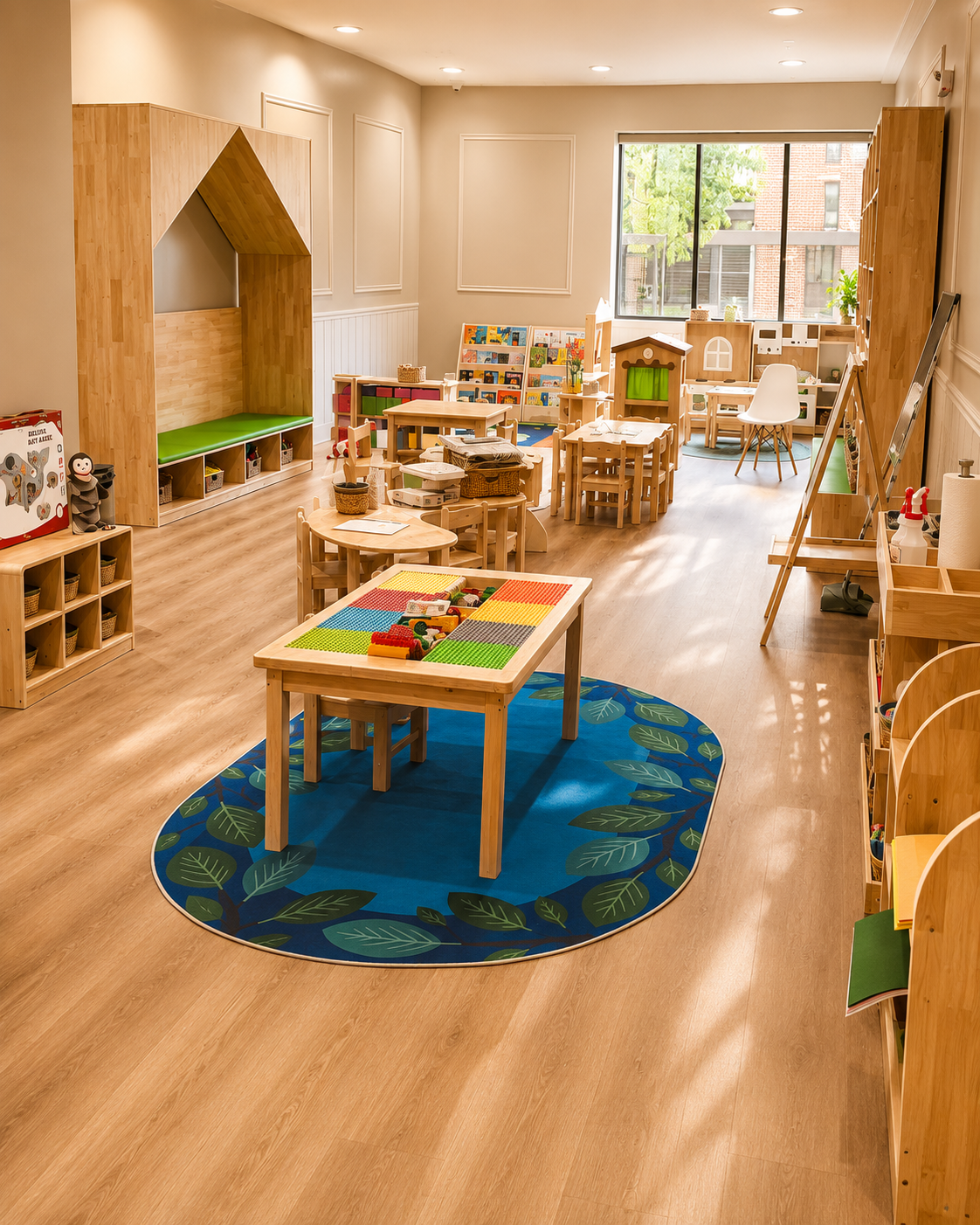
Books, construction, dramatic play, art, and early writing each have a place in the Bucktown classroom. Because materials stay within reach, a child can return to an idea later and gradually take charge of what they need.
Outdoor play, meals, cleanup, and looking after belongings belong to the learning day, too. With time, children carry more of that responsibility and begin to recognize themselves as part of the Bucktown community.
Collaborative play
A shared project gives children a real reason to plan together, work through a disagreement, and make room for a friend’s idea.
Kindergarten readiness
Readiness shows up when a child explains an idea, stays with a challenge, or takes on something with less help. Teachers support the communication, persistence, independence, and foundational thinking underneath those moments.
FIND YOUR L&L
A Place Where Your Child Can Feel Known
Choosing a Preschool or Pre-K program is about more than preparing for the next school year. You want to know that your child will be understood—the way they enter a room, the questions they return to, the friendships they are learning to navigate, and the moments when they still need someone close.
At L&L, teachers come to know those details. They recognize when a child is ready for a new challenge, when they need more time, and when a little encouragement can help them take the next step on their own. That relationship is what allows children to feel secure enough to try, speak up, make mistakes, and grow.
We would love to learn more about your family and help you explore the L&L location and classroom that may be the right fit for your child.
For tuition, availability, classroom placement, or scheduling a tour, please begin by completing our inquiry form. Your child's exact age, preferred location, and schedule help our Director of Enrollment provide accurate information.
For general questions—such as meals, allergies, or program policies—you can call or text 833-623-1959 and ask for Ms. Nadi, our Director of Enrollment, or email enroll@landlschool.com.
Have a general question? Ask L&L first — our virtual assistant can answer many common questions instantly.
Enrollment is still available if you need more help.